How to Use Piezo Ceramic Disc for Effective Sound and Vibration Applications?
In recent years, the use of Piezo Ceramic Disc technology has surged in various sound and vibration applications. According to a market research report by MarketsandMarkets, the piezoelectric materials market is expected to reach USD 35.2 billion by 2025, showing the growing demand for these components across industries. Experts like Dr. Susan Li, a leading figure in piezoelectric research, emphasizes, "The versatility of piezo elements, particularly ceramics, opens innovative avenues for sound applications."
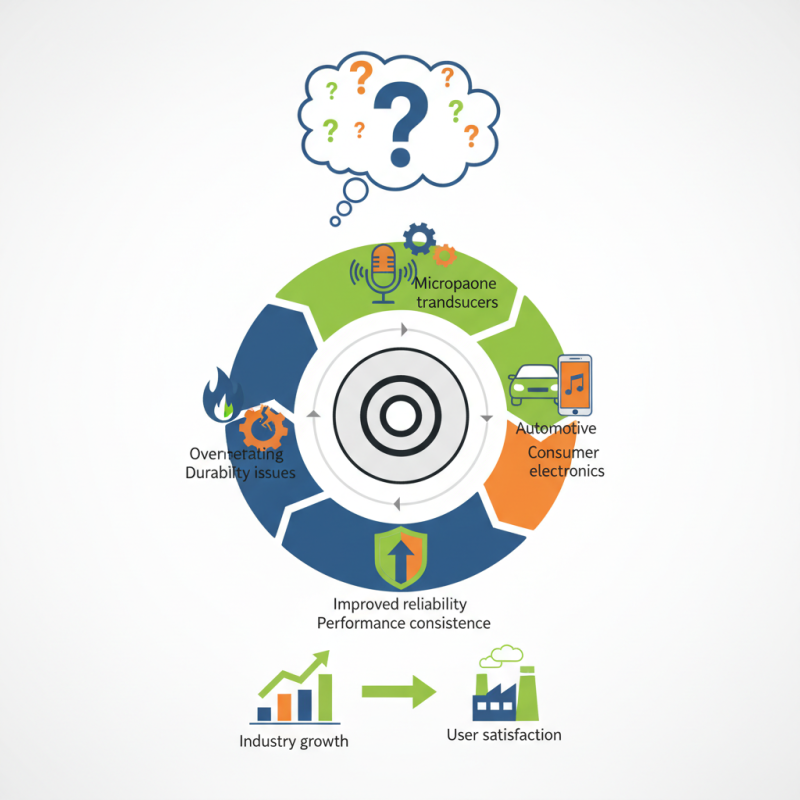
Piezo Ceramic Discs are essential in devices such as microphone sensors and ultrasonic transducers. Their compact size and high efficiency make them ideal for enhancing sound quality and control in numerous applications. In automotive and consumer electronics, these discs facilitate clearer sound reproduction. However, there is a need for improved reliability and performance consistency in real-world applications.
While advancements are promising, challenges remain. The potential for overheating and durability issues in harsh environments is a valid concern. Ensuring long-term reliability requires ongoing research and development. As the demand for Piezo Ceramic Discs increases, a proactive approach to problem-solving in design and application is crucial for industry growth and user satisfaction.
Understanding Piezo Ceramic Discs: Basics and Properties
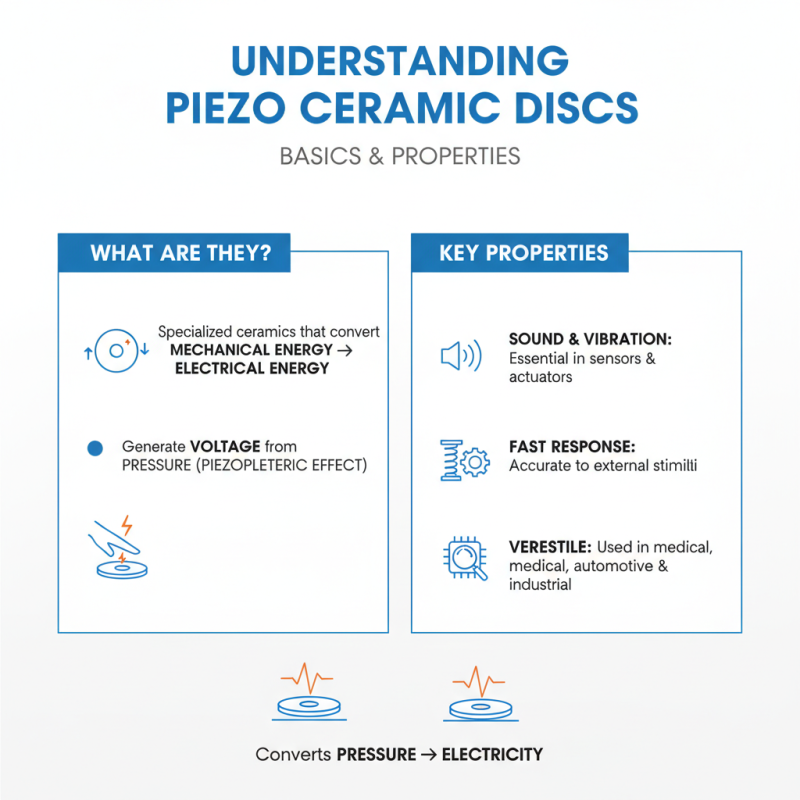
Piezo ceramic discs are crucial in sound and vibration applications. These materials convert mechanical energy into electrical energy and vice versa. They are made of ceramics that exhibit piezoelectric properties. This means they generate voltage when subjected to pressure. Their structure enables them to respond quickly and accurately to external stimuli.
When selecting a piezo ceramic disc, consider its dimensions. Size affects output and sensitivity. Larger discs can produce a higher voltage but may respond slower. On the other hand, smaller discs are quicker but provide less output. It's essential to match disc size with your application's requirements.
Tips: Always test a few discs to find the best fit. The testing phase often reveals unexpected results. Pay attention to the environmental conditions surrounding your application. Humidity and temperature can impact performance dramatically. Ensure you account for these factors during your design phase.
Understanding the limitations of piezo ceramic discs is vital. They may not function optimally under certain frequencies. This can lead to unexpected vibration patterns. Regularly observe and evaluate your equipment's performance. This practice will help refine your approach and ensure reliable outcomes.
Principles of Sound and Vibration Generation Using Piezo Technology
Piezo technology harnesses the unique properties of piezo ceramic discs to generate sound and vibrations effectively. These discs transform electrical energy into mechanical motion. When voltage is applied, they deform slightly, creating pressure waves. This principle is critical in various applications, such as speakers and sensors. The ability to control these vibrations allows for precise sound generation.
In practice, the design and orientation of piezo discs can significantly influence performance. A common challenge is to achieve optimal placement. Misalignment can lead to reduced efficiency or undesired sound frequencies. Testing and experimentation become crucial steps for engineers. They often adjust parameters like shape and thickness to fine-tune sound quality. Successful applications in alarm systems and medical devices highlight the versatility of piezo technology.
While piezo-based systems show great potential, they can sometimes exhibit inconsistency in output. Certain environmental factors may affect their performance. It’s essential to consider temperature fluctuations or humidity levels during implementation. These variables can lead to varying results, prompting continuous refinement of the designs. As the field evolves, ongoing research aims to overcome these challenges and enhance reliability.
How to Use Piezo Ceramic Disc for Effective Sound and Vibration Applications?
| Application |
Frequency Range (kHz) |
Voltage Range (V) |
Typical Use |
| Audio Transducers |
20 - 20,000 |
1 - 100 |
Speakers and Microphones |
| Vibration Sensors |
1 - 20,000 |
3 - 50 |
Monitoring Machine Health |
| Ultrasonic Cleaning |
20 - 100 |
10 - 200 |
Cleaning Delicate Items |
| Piezosurgery |
25 - 30 |
50 - 100 |
Bone Surgery and Dental Procedures |
| Pulse Generators |
100 - 500 |
5 - 50 |
Signal Generation for Testing |
Applications of Piezo Ceramic Discs in Audio Devices
Piezo ceramic discs have become essential components in various audio devices due to their unique properties. These discs can convert electrical energy into mechanical vibrations. This transformation allows them to produce sound efficiently. In speakers, they deliver clear audio by vibrating at specific frequencies. This precision makes them popular in miniature sound systems.
Additionally, piezo ceramic discs play a crucial role in microphones. They capture sound waves and convert them back into electrical signals. This feature enhances sound quality in voice recording and amplification. Their lightweight nature allows for portability, making them ideal for handheld devices. However, they may not always provide the deepest bass tones.
Innovations continue in using piezo ceramic technology in emerging audio gadgets. While they excel in compact designs, it’s essential to consider their limitations. Users may notice variations in performance based on application. This variability highlights the importance of careful selection and testing in design. Audio engineers must balance size, efficiency, and sound quality for optimal results.
Optimizing Performance: Tips for Effective Piezo Integration
When integrating piezo ceramic discs into sound and vibration applications, attention to detail is crucial. Proper mounting is vital for performance optimization. Ensure a solid connection between the disc and its mounting surface. Use appropriate adhesives to minimize losses due to damping. A poorly secured disc will not vibrate effectively, leading to suboptimal sound production.
Tuning the operating frequency is another key factor. Each piezo disc has a specific resonant frequency. Testing various frequencies through trial and error can help identify the sweet spot for your application. The response may vary under different load conditions, so be prepared to adjust accordingly. Observing and modifying parameters will lead to better overall results.
Calibration is essential, but it can be tricky. Regularly assess the performance of the piezo setup to spot any inconsistencies. Environmental factors, such as temperature and humidity, can also impact performance. Understanding these variables is vital for consistent output. These nuances may seem minor, but they can significantly affect your application’s effectiveness.
Performance of Piezo Ceramic Discs Across Frequency Ranges
This bar chart illustrates the output voltage generated by piezo ceramic discs across various frequency ranges. As the frequency increases from low to ultra high, the output voltage exhibits variability, highlighting the effectiveness of piezo materials in different sound and vibration applications.
Troubleshooting Common Issues in Piezo Sound and Vibration Systems
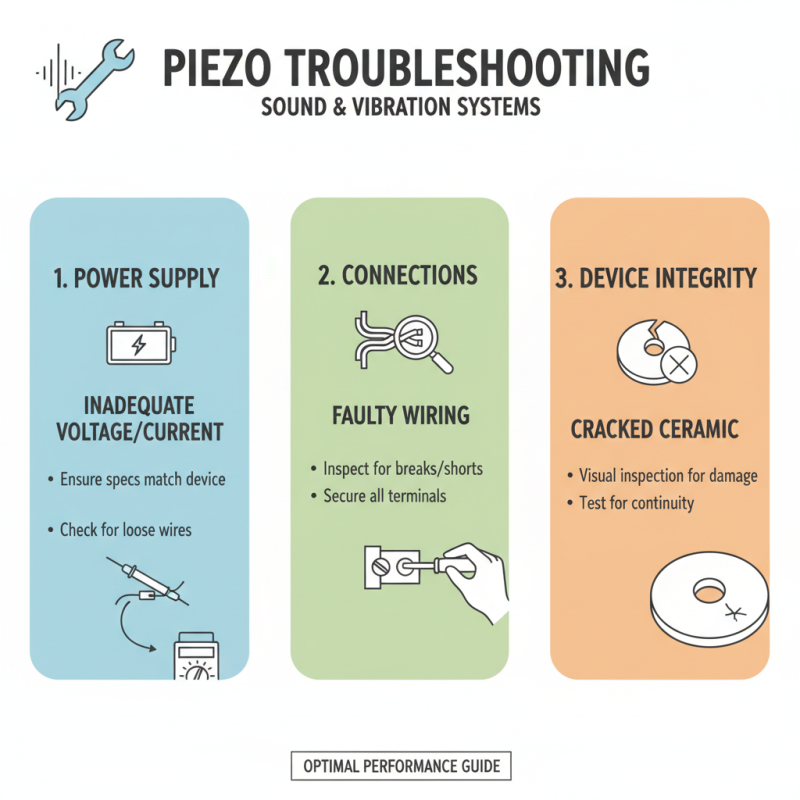
When working with piezo ceramic discs, troubleshooting common issues is essential for optimal performance in sound and vibration applications. One frequent problem arises from inadequate power supply. Ensure the voltage and current align with the specifications of the piezo device. Check connections for any loose wires, as they can disrupt normal operation.
Another challenge is frequency mismatch. The natural resonant frequency of a piezo disc is crucial. If your system operates outside of this range, efficiency drops significantly. Use an oscilloscope to measure frequency output and adjust your settings accordingly.
Tips: Regularly inspect your equipment for signs of wear. Over time, components can degrade, leading to unexpected failures. Don’t overlook environmental factors; humidity and temperature can affect performance. Be open to reconsidering your setup if recurring issues arise. Understanding the nuances of piezo technology can save time and resources in the long run. Adjustments may require trial and error.