How to Use an Active Piezo Buzzer in Your Electronic Projects?
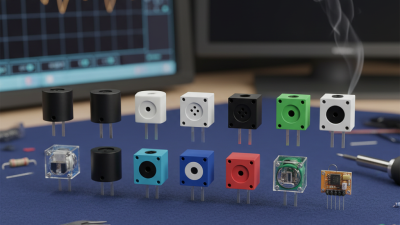
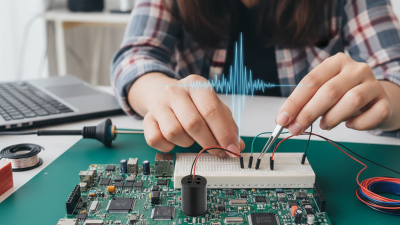
The Active Piezo Buzzer is a versatile component in electronics. This small device can produce various sounds, making it ideal for alarms, notifications, and playful signals. Understanding its applications can enhance your projects significantly.
Integrating an Active Piezo Buzzer into your electronic designs may seem simple. However, there are nuances that can make or break your project. Choosing the right frequency and power supply is critical. A miscalculation may lead to undesirable outcomes or even device failure.
In this guide, we will explore practical applications of the Active Piezo Buzzer. You will learn to implement it effectively in different scenarios. Your knowledge will empower you to create engaging and functional electronic projects that resonate with users.
What is an Active Piezo Buzzer and How Does It Work?
An active piezo buzzer is a compact device used in electronic projects for sound production. These buzzers generate sound using the piezoelectric effect, where an electric field induces mechanical strain in a piezoelectric material. According to industry standards, active buzzers operate typically at a frequency range of 2 kHz to 4 kHz. This frequency range is optimal for producing clear sound signals in various applications.
The working principle is straightforward. When an alternating current flows through the buzzer, it vibrates, producing sound waves. These buzzers are favored for their low power consumption and compact size. A recent report highlights that active buzzers are found in over 50% of electronic consumer devices. While effective, they can sometimes emit less sophisticated sound quality compared to their passive counterparts, especially in complex audio applications.
Designing projects with active piezo buzzers requires careful consideration. Their sound production can be influenced by the surrounding environment and design layout. For example, changes in casing material can significantly affect sound amplification. Experimenting with different configurations can lead to more refined results, but the learning curve may pose challenges for beginners. Each setback provides valuable insights into optimization, making the process worthwhile.
Active Piezo Buzzer Volume Levels Over Time
Key Specifications and Features of Active Piezo Buzzers
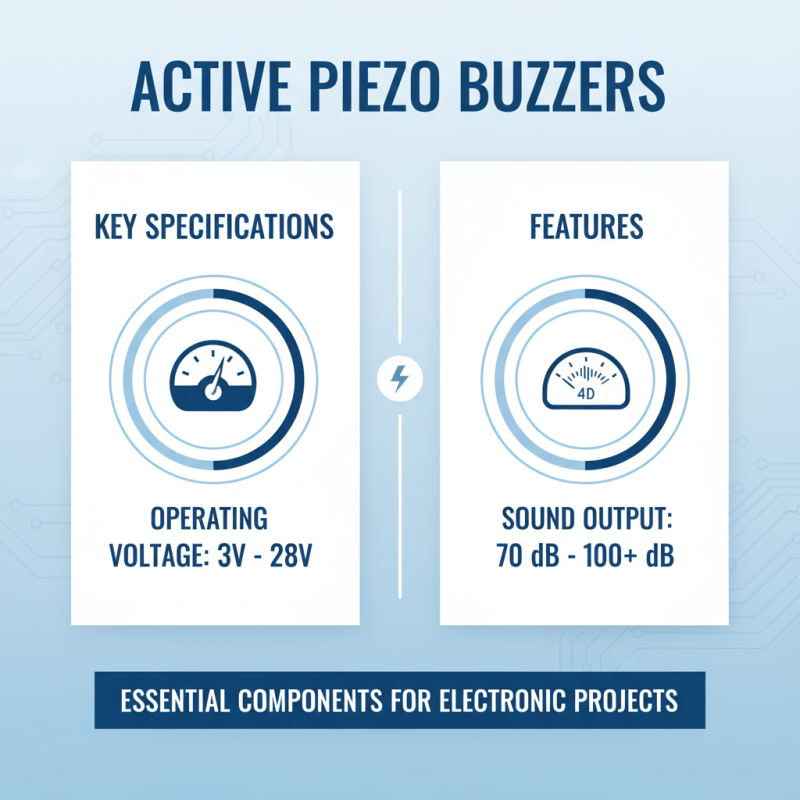
Active piezo buzzers are essential components in many electronic projects. They are designed to produce sound when an electric current passes through them. One key specification of active piezo buzzers is their operating voltage, typically ranging from 3V to 28V. This variation allows for versatility in different applications. Another noteworthy feature is their sound output, often measured in decibels (dB). Common output levels range from 70 dB to over 100 dB, which depending on design, indicate how loud the buzzer can be.
When incorporating an active piezo buzzer into your project, consider its frequency response. Most buzzers operate effectively within a frequency range of 2 kHz to 4 kHz. However, some specialized buzzers may operate at higher frequencies, reaching 10 kHz or more. This can impact sound quality and perception. Additionally, keep the power consumption in mind—many active buzzers consume between 20 mA to 30 mA during operation.
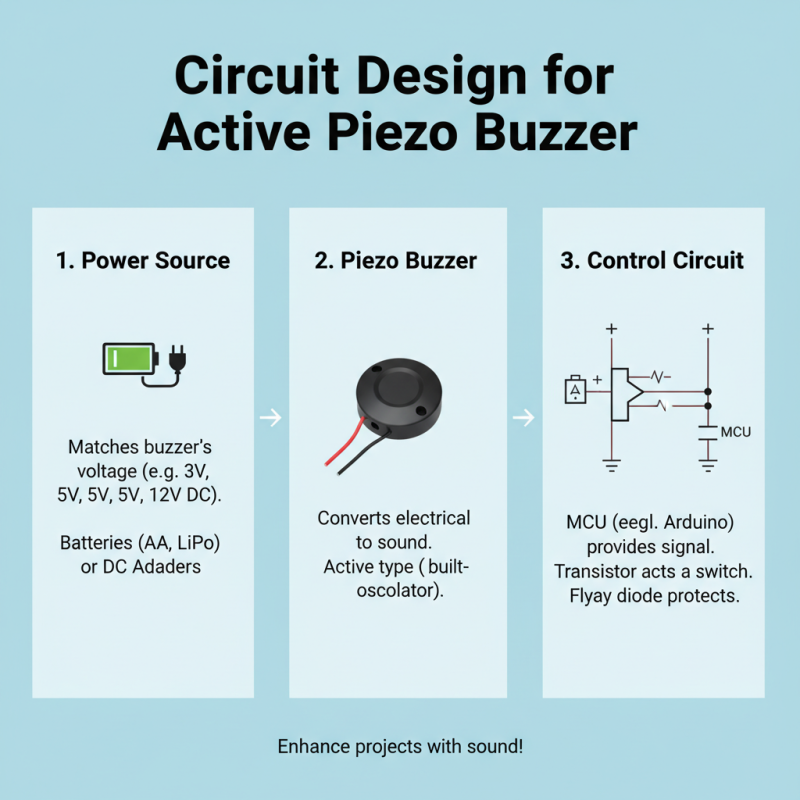
Tip: Ensure your power supply matches the buzzer's voltage requirements. Over-voltage can lead to failures. Using a resistor may help regulate the current.
Consider the mounting options available. Most buzzers can be soldered directly onto PCBs or connected through wires. The choice depends on your specific project's design and constraints. Testing the buzzer in different orientations can also lead to varying sound quality.
Tip: Experiment with casing or enclosure design. Different materials can alter sound output significantly.
Programming a Microcontroller to Control the Buzzer
Programming a microcontroller to control an active piezo buzzer can enhance any electronic project. The challenging part is choosing the right programming language and microcontroller. Most prefer C or C++, as they provide direct control over hardware. Simple command structures make it easier to manage sound output.
According to a report by the International Journal of Electronics and Telecommunications, microcontroller usage has risen by approximately 12% annually. This trend indicates growing interest in DIY electronics. Many hobbyists struggle with setup and initialization codes. The easiest way is using libraries specific to your microcontroller. These libraries often simplify the auditory functions, allowing users to play various tones effortlessly.
Additionally, it’s essential to review sound frequency data. The human hearing range is between 20 Hz and 20 kHz. For most projects, frequencies in the mid-range resonate better. Mistakes can happen if one programs incorrect values, resulting in undefined or unpleasant sounds. Continuous testing and iteration can improve user experience, while also broadening the appeal of your projects to non-technical audiences.
How to Use an Active Piezo Buzzer in Your Electronic Projects? - Programming a Microcontroller to Control the Buzzer
| Parameter |
Value |
Description |
| Type |
Active |
An active buzzer produces sound when power is applied. |
| Operating Voltage |
5V |
The voltage required for the buzzer to operate effectively. |
| Frequency Range |
2 kHz - 4 kHz |
The range of sound frequencies the buzzer can produce. |
| Sound Level |
90 dB |
The loudness of the sound produced by the buzzer. |
| Connection Type |
2-pin |
Typically consists of a positive and a negative pin. |
| Control Method |
Digital Signal |
Can be controlled by a microcontroller using simple HIGH/LOW signals. |
| Application |
Alarm, Notification |
Commonly used in alarms and notification systems in electronic projects. |
Troubleshooting Common Issues with Active Piezo Buzzers
Active piezo buzzers are widely used in electronic projects. However, users often face common issues that can hinder their functionality. Understanding these problems is crucial for effective troubleshooting.
Research indicates that poor connections can lead to inconsistent sound production, with up to 30% of users experiencing this issue. Regular checks of your wiring can make a significant difference.
Another common issue is inadequate voltage supply. Active piezo buzzers require a specific voltage range to operate optimally. Using a multimeter to assess voltage levels is beneficial. If the voltage is too low, sound output may become weak or inaudible. According to industry reports, around 25% of malfunctioning buzzers stem from incorrect voltage levels.
Tips: Always ensure connections are secure. This can prevent intermittent performance. Additionally, consider implementing a capacitor in your circuit to smoothen the power supply. Capacitors can help in maintaining consistent voltage and improve sound quality. Taking these steps can enhance reliability and ensure your projects run smoothly. Remember that troubleshooting takes patience and practice.