How to Use Piezo Technology for Your Business Needs?
In today's fast-paced business landscape, staying competitive requires innovation. One promising solution is Piezo Technology. This technology harnesses the power of mechanical stress to generate electricity. Many industries have begun to explore its potential, but the adoption is still growing.
For businesses, integrating Piezo Technology can enhance efficiency and sustainability. For instance, manufacturers have seen cost savings by using piezoelectric sensors. These sensors improve equipment monitoring and reduce downtime through timely maintenance alerts. However, not all companies fully understand how to implement this technology effectively.
Investing in Piezo Technology can be a challenge. Businesses must evaluate their needs carefully. Understanding the specific applications within your field is crucial. However, potential benefits often outweigh these concerns. With proper research and planning, companies can leverage Piezo Technology for significant gains.

Understanding Piezo Technology: Definition and Applications
Piezo technology involves using materials that generate electric charge under mechanical stress. This unique property makes it valuable across various industries. From automotive to medical devices, piezo technology has diverse applications. It is commonly used in sensors, actuators, and energy harvesting devices. Understanding its functionality helps businesses realize its potential.
In practice, piezo technology can enhance product design. For instance, wearable devices can benefit from smaller and lighter piezo-based sensors. These sensors respond to body movements, providing real-time data. However, integrating this technology can be challenging. You must ensure compatibility with other components. Testing and iteration are crucial for success.
Tips for implementation? Start small. Experiment with prototypes to gather insights. Seek collaboration with engineers experienced in piezo systems. Don’t hesitate to ask for feedback from users. Their experiences can guide improvements. Remember, every business has unique needs. Adapt piezo applications to fit your goals. Reflect on past attempts to refine your approach.
Identifying Business Needs Suitable for Piezo Solutions
Piezo technology offers unique solutions for diverse business needs. Its applications can be found in sectors like manufacturing, healthcare, and consumer electronics. Identifying where piezo solutions can fit is crucial for businesses seeking efficiency and innovation. For example, in the manufacturing sector, piezoelectric sensors can enhance precision in robotic assembly lines. These sensors provide real-time feedback, ensuring products meet quality standards.
In healthcare, piezo technology aids in non-invasive diagnostic tools. Devices using piezoelectric elements can generate high-frequency sound waves, which are vital for imaging. This can improve patient outcomes by allowing faster diagnoses. However, the integration of this technology requires careful assessment. It’s essential to weigh costs against the benefits. Not every business may find piezo solutions cost-effective.
Consumer electronics also embrace piezo technology. Piezo speakers produce high-quality sound with minimal space. They can make devices lighter and more portable. Still, businesses need to consider the longevity and reliability of these components. Piezo technology is promising, but it’s not without its challenges. Businesses must reflect on their specific needs before adoption.
Utilization of Piezo Technology Across Various Industries
Selecting the Right Piezo Devices for Your Industry
When selecting piezo devices for your industry, start by identifying your specific applications. Piezo technology offers vast potentials, but not all devices are suitable for every purpose. Understand your operational requirements, whether it’s sensing, actuation, or energy harvesting. This clarity will guide you in making an informed choice.
Tips: Focus on the frequency range of the piezo device. Different applications may require specific resonance frequencies. Choose a device that aligns with your needs to avoid inefficiencies. Testing is crucial. Not all devices perform well in real-world scenarios, so practical testing can save time and resources.
Another key factor is environmental compatibility. Your selected piezo devices must withstand the conditions of your operation, whether it’s high temperatures, humidity, or vibration. If they aren’t suited for the environment, the longevity and reliability could be compromised.
Tips: Evaluate the material composition of the piezo device. Some materials may degrade over time, affecting performance. Durability is essential for long-term applications. Don’t overlook the importance of ongoing support from suppliers. A reliable partner can provide insights and assistance, enhancing your operational success with piezo technology.
Integrating Piezo Technology into Existing Systems
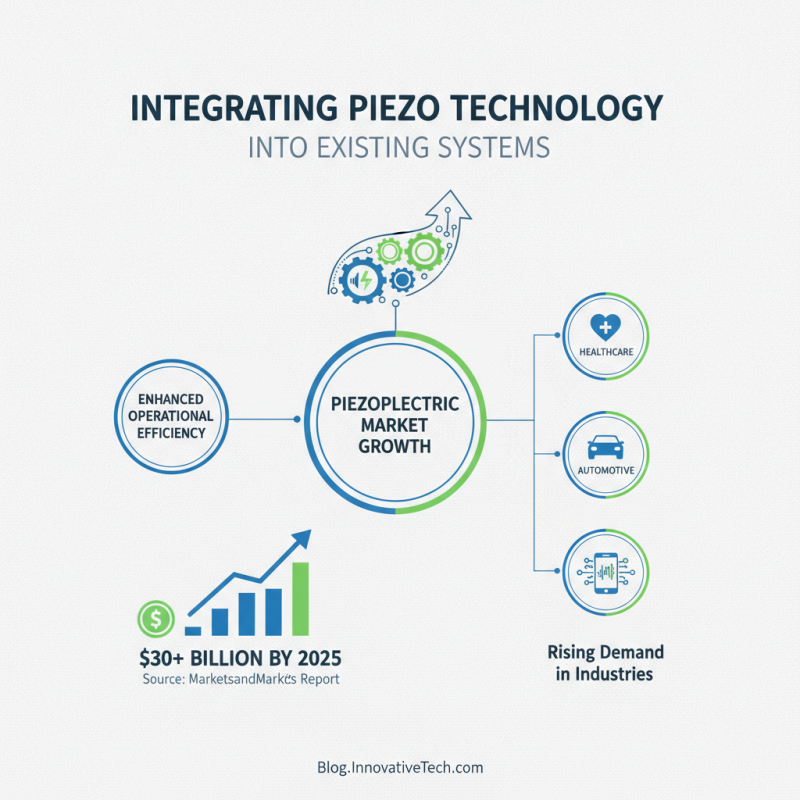
Integrating piezo technology into existing systems can significantly enhance operational efficiency. According to a report by MarketsandMarkets, the piezoelectric market is expected to grow to over $30 billion by 2025. This indicates a rising demand for advanced materials in industries such as healthcare, automotive, and consumer electronics.
One effective approach is to modify your existing sensors with piezo-based components. This can improve accuracy in data collection and responsiveness in various applications. In automotive systems, piezo technology is employed in certain fuel injectors, providing more precise control over emissions. Advanced integration may require retraining staff to handle new systems effectively.
Tips for implementation: focus on training your team. Introduce hands-on workshops to familiarize them with piezo technology. Additionally, conduct a thorough assessment of your current systems to identify potential integration points. Remember, not every system will benefit equally; a thoughtful approach can avoid wasted resources. Testing various applications can uncover unique advantages. Monitor performance closely after implementation to fine-tune the systems for optimal results.
Measuring and Analyzing Performance After Implementation
Implementing piezo technology can transform how businesses function. However, measuring its impact post-implementation is crucial. Companies should focus on key performance indicators (KPIs) that align with their goals. For instance, tracking efficiency metrics is vital. Recording data before and after implementation provides a clear picture of progress.
Analyzing this data reveals patterns and areas for improvement. Engaging with teams helps gather qualitative insights. Employee feedback often highlights unexpected issues or advantages. It’s essential to use this information constructively. Sometimes, initial results may not meet expectations. This reality check prompts companies to adapt strategies quickly.
One practical approach is to schedule regular reviews. Establishing a timeline for assessments ensures accountability. In these sessions, teams can discuss challenges faced and brainstorm solutions. Continuous learning is part of the process. Embracing reflections creates an adaptive culture while enhancing the overall effectiveness of piezo technology in business operations.