What is Piezo Motion and Its Top Applications in 2026?
Piezo Motion is an innovative technology that harnesses the unique properties of piezoelectric materials. These materials generate mechanical motion when an electric voltage is applied. This principle opens new doors for various applications in robotics, automotive, and healthcare sectors. By 2026, experts predict that Piezo Motion will significantly influence how devices operate.
In robotics, Piezo Motion technology enhances precision and efficiency. Robots can execute complex tasks with improved accuracy. Additionally, it enables smaller and lighter designs without sacrificing power. In the automotive industry, Piezo Motion will play a crucial role in enhancing active safety systems. From adaptive suspensions to advanced braking systems, this technology ensures a safer driving experience.
Healthcare applications are also promising. Piezo Motion can revolutionize medical devices, offering more responsive and compact solutions. For instance, it may improve surgical instruments and diagnostic tools. Nevertheless, Piezo Motion presents challenges, including material limitations and manufacturing complexities. Addressing these issues is vital for realizing its full potential.

What is Piezo Motion?
Piezo motion refers to the ability of certain materials to generate an electric charge in response to applied mechanical stress. This phenomenon is fundamental in various applications, ranging from precise actuator movements to sensor technologies. According to industry reports, the global piezoelectric devices market is projected to reach $30 billion by 2026. This surge highlights the growing dependence on piezo technologies in sectors like healthcare, telecommunications, and robotics.
In healthcare, piezo motion is instrumental in ultrasound imaging. The accuracy and reliability of imaging devices depend on these materials' response to vibrations. Sensors utilizing piezoelectric effects can detect minute changes in pressure, offering precise monitoring capabilities. However, the technology isn't without limitations. For instance, the challenge of material fatigue can affect long-term performance.
Tip: When choosing piezoelectric components, consider their operational longevity and application-specific needs. In robotics, piezo motion enhances motor control and responsiveness. Yet, the integration of these systems often requires careful calibration. In many cases, user experience can vary, highlighting the need for continuous improvement and testing. Understanding the nuances of piezo technology can lead to better implementation in real-world applications.
Fundamental Principles of Piezoelectricity
Piezoelectricity relies on materials that generate electric charge under mechanical stress. When these materials are deformed, they produce a voltage. This concept is not just theoretical; it applies to various technologies. Understanding the fundamental principles helps in exploring its capabilities.
The piezoelectric effect involves asymmetric crystal structures. When these crystals are squeezed or stretched, displaced charge centers create an electric field. This two-way interaction also allows for voltage control over physical movement. Such properties are essential in actuators, sensors, and transducers. Professionals in engineering and physics often study this phenomenon.
Piezoelectric devices can be small and efficient. They find uses in several applications like medical imaging and industrial automation. However, challenges exist. Material fatigue and temperature dependency can influence performance. Ensuring long-term reliability may require further research. Exploring these nuances enhances our understanding of piezoelectricity's future potential in various sectors.
Key Benefits and Advantages of Piezo Motion Technology
Piezo motion technology offers innovative solutions across various industries. It utilizes the piezoelectric effect to convert electrical energy into precise mechanical motion. This characteristic makes it ideal for applications requiring high accuracy and quick responses. According to a report by ResearchAndMarkets, the global market for piezo devices is projected to grow at a CAGR of 8.8% from 2021 to 2026. This swift growth underscores the industry's recognition of its potential.
The key benefits of piezo motion technology include its compact size and energy efficiency. Devices can be lightweight, making them suitable for applications in sectors like aerospace and robotics. Their low power consumption allows for extended operation without significant energy depletion. Data from MarketsandMarkets indicates that piezoelectric actuators play a crucial role in advanced automation, enhancing productivity and efficiency. However, challenges remain. The high costs of manufacturing and material limitations can hinder broader implementation.
Medical devices also benefit from piezo technology. Applications in imaging and surgical instruments demonstrate its precision and reliability. In 2023, the medical sector accounted for roughly 25% of the piezo devices market, a testament to its critical role. Nonetheless, ongoing research is needed to tackle issues like sensitivity and durability under varied conditions.
Piezo Motion Technology Applications in 2026
This chart illustrates the projected distribution of Piezo Motion technology applications by sector in 2026, highlighting the main areas where this technology is expected to excel.
Top Applications of Piezo Motion in 2026
Piezo motion technology is rapidly gaining traction across various industries. In 2026, its applications will likely expand significantly. One notable area is healthcare, especially in minimally invasive surgeries. Piezoelectric actuators can enhance precision, enabling surgeons to perform tasks with incredible accuracy.
Another key application is in robotics. Robots equipped with piezo technology can achieve faster movements and improved responsiveness. This can lead to better performance in tasks requiring high dexterity. For example, automated systems in warehouses could function more efficiently, handling goods with tailored motions.
Tips: When considering piezo motion applications, think about integration challenges. Proper calibration is crucial for optimal performance. Always evaluate the power supply needs of piezo devices. Understanding these factors can enhance system reliability.
Looking ahead, the automotive sector will also feel the impact of piezo motion. Innovations such as self-adjusting seats and advanced suspension systems could significantly improve ride quality. However, the implementation of such complex systems may still need testing and refinement. Careful consideration and research are essential for successful integration in this fast-evolving field.
Future Trends and Innovations in Piezo Motion Technology
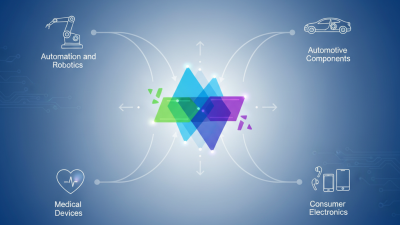
Piezo motion technology has shown remarkable growth in recent years. It utilizes the principle of piezoelectricity, converting electric energy into mechanical movement. This innovation is already transformative in robotics, medical devices, and consumer electronics. In 2026, we can expect even greater advancements, pushing the boundaries of various industries.
One key trend is miniaturization. Devices are becoming smaller and more efficient. Piezo elements can enable precise movements in confined spaces. This capability can revolutionize surgical robots and drones. Increased automation in manufacturing also relies on more compact and versatile piezo actuators. They improve the speed and accuracy of processes, making them essential for competitive industries.
However, there are notable challenges. The complexity of integrating piezo systems can lead to higher costs, which may hinder widespread adoption. There needs to be a balance between performance and affordability for this technology to reach its full potential. Additionally, as applications expand, maintaining reliability in a diverse range of environments remains a concern. Addressing these issues will shape the future landscape of piezo motion technology.
What is Piezo Motion and Its Top Applications in 2026?
| Application Area |
Description |
Projected Growth Rate |
Key Benefits |
| Healthcare Devices |
Utilization of piezoelectric materials in medical equipment for precision measurements. |
15% |
Enhanced accuracy and patient outcomes. |
| Consumer Electronics |
Integration in smartphones and wearables for haptic feedback and touch sensitivity. |
20% |
Improved user experience and interface responsiveness. |
| Automotive |
Implementation in sensors for monitoring engine performance and safety systems. |
12% |
Increased efficiency and enhanced safety features. |
| Aerospace |
Use in control systems for stabilization and actuation. |
18% |
Higher reliability and reduced weight for better fuel efficiency. |
| Industrial Automation |
Piezomotors for precise positioning and robotic applications. |
22% |
Enhanced efficiency in manufacturing processes. |