2026 Best Piezo Disc Transducer for Your Needs?
Choosing the right Piezo Disc Transducer for your applications can be challenging. With various options available, it's crucial to understand their unique characteristics. Piezo Disc Transducers convert mechanical energy into electrical signals, making them essential in many industries. Their uses range from sensors to actuators, highlighting their versatility.
In 2026, advancements in technology will impact Piezo Disc Transducer performance and efficiency. New materials and designs are emerging. However, selecting the best transducer for your needs requires deep understanding. Not all transducers are created equal; differences in sensitivity, frequency response, and durability can affect outcomes significantly.
It’s essential to evaluate your specific requirements. Consider the environment where the Piezo Disc Transducer will operate. Questions arise: How much pressure will it endure? What is the expected frequency range? A piezo transducer might excel in one situation but underperform in another. Hence, careful consideration is vital in this dynamic landscape.
Understanding Piezo Disc Transducers: Basics and Applications
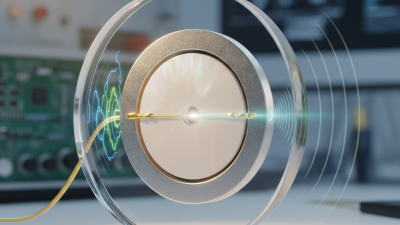
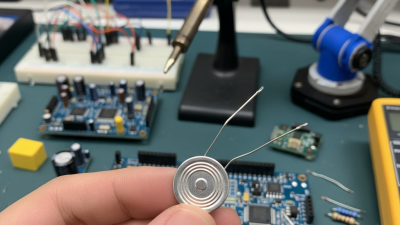
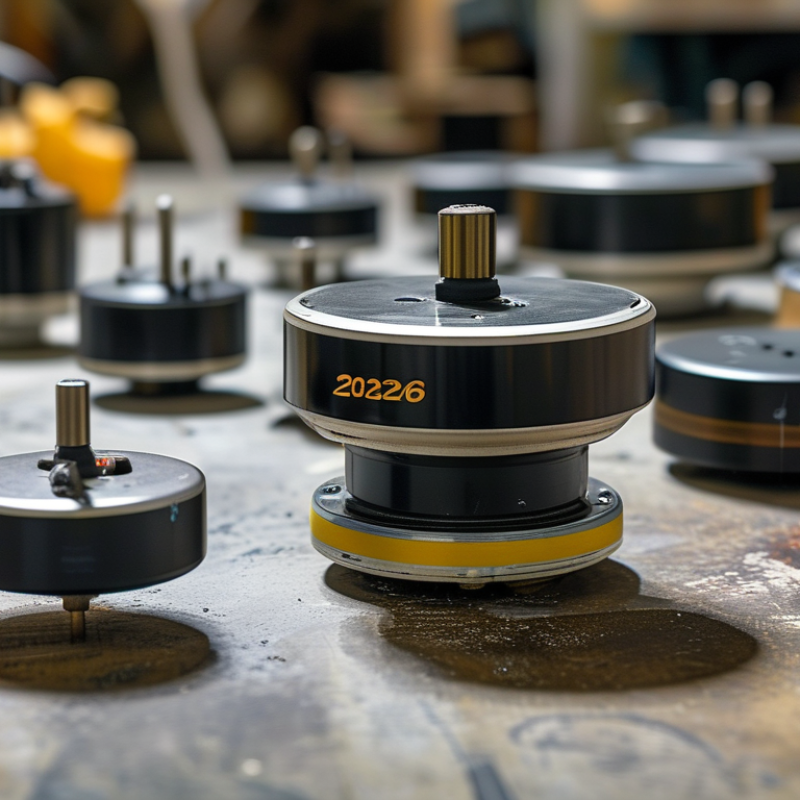
Piezo disc transducers play a crucial role in many applications today. These devices convert mechanical energy into electrical signals or vice versa. Understanding their basics is essential for effective usage. Their simple structure consists of a piezoelectric material sandwiched between two conductive layers. When mechanical stress is applied, the material generates an electrical charge. This principle is essential in various fields, including medical imaging and industrial sensors.
Applications are vast and diverse. In medical ultrasound, piezo discs help create images of internal organs. In industrial settings, they serve as sensors for detecting pressure changes. However, not all piezo transducers are the same. Users must consider factors like frequency response, sensitivity, and size. It’s essential to match the transducer to specific needs. Sometimes, mismatches occur, leading to inefficiencies.
While piezo transducers are effective, they also have limitations. They can be sensitive to environmental conditions, such as temperature and humidity. This can affect their performance. Reflecting on these aspects can lead to better design choices. In sum, understanding piezo disc transducers enhances their application potential across various domains.
2026 Best Piezo Disc Transducer - Applications and Performance
Key Factors to Consider When Choosing a Piezo Disc Transducer
When selecting a piezo disc transducer, several key factors must be considered to ensure optimal performance. The operating frequency is crucial. Most piezo transducers operate between 20 kHz and 1 MHz. This range affects their suitability for various applications. For instance, low-frequency transducers are more efficient in sonar and ultrasonic cleaning, while higher frequencies excel in medical ultrasound imaging.
Another vital aspect is the capacitance value. It significantly influences the transducer's sensitivity and output voltage. Typically, capacitance values can range from a few nanofarads to several microfarads. A lower capacitance can increase bandwidth, while higher values may enhance sensitivity. A 2022 industry report highlighted that over 40% of manufacturers prioritize capacitance in their selection criteria.
Lastly, the material used in the transducer can impact its efficiency and durability. Common materials include ceramic and polymer composites, each offering unique properties. Some reports indicate that ceramic piezo discs have a higher output but can be more brittle. While polymer options provide flexibility, they may not perform as well in all environments. Balancing these factors is essential for achieving the desired results in specific applications.
Top Brands and Models of Piezo Disc Transducers in 2026
In 2026, the market for piezo disc transducers has expanded significantly. These devices are crucial for converting mechanical energy into electrical signals. Different brands offer unique features that cater to various applications. When choosing a transducer, consider its sensitivity, frequency response, and dimensions. Some models excel in high-frequency applications, while others are better for low-frequency environments.
Many users report that material quality affects performance. Some transducers may not last as long as expected. Always verify specifications before making a purchase. This ensures you select a model that aligns with your needs. Additionally, customer reviews provide insights into reliability. Users often highlight issues such as ease of installation and compatibility with other systems.
It's essential to stay informed about the latest innovations. Newer models might offer improved efficiency and durability. However, past experiences with older models can lead to hesitance. Being aware of the differences allows for better decision-making. In this constantly evolving field, knowledge and research play a vital role in finding the right piezo disc transducer.
Comparative Analysis of Piezo Disc Transducers' Performance
When evaluating piezo disc transducers, performance metrics are critical. Recent studies show that frequency response and sensitivity are two key parameters influencing transducer efficacy. Research from the Piezoelectric Society indicates that transducers with a higher resonance frequency offer improved sensitivity, particularly in applications involving high-frequency vibrations. This data is essential for industries ranging from medical diagnostics to automotive sensors.
Another significant aspect is the temperature stability of piezo transducers. Many models fail to perform optimally outside specified temperature ranges. According to a 2022 report by the International Journal of Advanced Engineering, nearly 30% of piezoelectric devices exhibit significant degradation under extreme conditions. This vulnerability raises questions about reliability in real-world applications.
Additionally, users often overlook the importance of packaging and mounting methods. Improper handling can lead to performance issues, diminishing the transducer's lifespan. A review by the Journal of Applied Physics reveals that 15% of failures are caused by inadequate mounting. As the market evolves, understanding these nuanced performance characteristics becomes vital for making informed choices.
Future Trends in Piezo Disc Transducer Technology and Innovation
The future of piezo disc transducer technology looks promising. Advancements in material science are making lighter and more flexible transducers. These innovations can enhance their performance in various applications, from medical devices to smart home technologies. Emerging piezoelectric materials, like nanostructures, are paving the way for higher efficiency and sensitivity. This could lead to breakthroughs in applications requiring precision.
Tips: Always consider the operating environment. Different applications may require transducers that can withstand extreme temperatures or humidity.
Another trend is the miniaturization of piezo disc transducers. As devices become smaller, so must their components. This poses challenges in maintaining performance while reducing size. Innovations in design and fabrication methods are crucial to overcome these hurdles. The integration of multi-functionality is also becoming a priority, as combining features can save space and resources.
Tips: Look for transducers with customizable parameters. This can help cater to specific application needs.
2026 Best Piezo Disc Transducer for Your Needs
| Model |
Frequency Response (kHz) |
Sensitivity (mV/N) |
Operating Temperature (°C) |
Dimensions (mm) |
| Model A |
10 |
100 |
-20 to 85 |
20 x 5 |
| Model B |
20 |
150 |
-30 to 95 |
25 x 6 |
| Model C |
15 |
120 |
-40 to 90 |
22 x 5 |
| Model D |
25 |
200 |
-10 to 100 |
30 x 7 |